The 4F Trauma Responses
The four primary survival strategies the nervous system uses when faced with a perceived threat: Fight, Flight, Freeze, and Fawn.
Identified heavily in the work of Pete Walker (CPTSD), the 4F responses are automatic physiological reactions to trauma. Children of emotionally immature parents often get "stuck" in one or two of these responses because their childhood environment required constant vigilance.
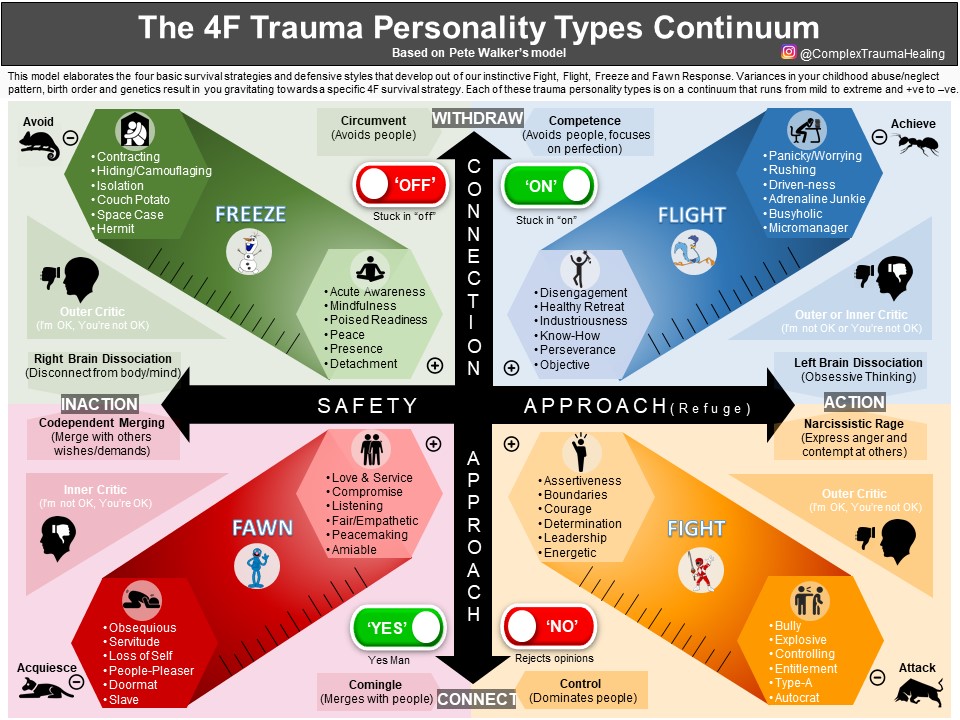
Understanding the Four Trauma Responses
When a child’s environment is characterized by constant emotional volatility, chronic neglect, or erratic reactions, their nervous system registers their home as a threat zone. Because a child cannot physically leave, their brain relies on automatic physiological survival strategies:
- Fight (The Narcissistic Defense): Reacting to triggers with immediate anger, aggression, or a need to control the environment. In childhood, a fight response might have kept a parent from attacking. In adulthood, it manifests as chronic irritability, a demand for perfection in others, or explosive reactions to boundaries.
- Flight (The Obsessive-Compulsive Defense): Reacting by running away, physically or mentally. This is characterized by constant busyness, workaholism, panic, or obsessive overthinking. In childhood, staying busy or physically distant kept you safe. In adulthood, it prevents you from feeling your feelings because you are always running.
- Freeze (The Dissociative Defense): Reacting by shutting down, spacing out, or going numb. The nervous system acts like a prey animal playing dead when threat is overwhelming. In childhood, this meant hiding in your room or retreating into daydreaming. In adulthood, it manifests as chronic dissociation, procrastination, sleeping to escape stress, or feeling completely "blank" during conflict.
- Fawn (The Codependent Defense): Reacting by appeasing, people-pleasing, and prioritizing the threat’s comfort over your own. This is highly common in EIP households. In childhood, keeping the parent happy was the only way to avoid their rage or withdrawal. In adulthood, it turns into chronic people-pleasing, self-abandonment, and loss of boundaries.
Most adult children of EIPs become stuck in a hybrid trauma response (e.g., Fight/Fawn or Flight/Freeze), using these mechanical, subconscious defenses to navigate relationships. Healing involves recognizing when you are triggered, calming your somatic system, and choosing conscious, adult responses over childhood reflexes.
Kim's Thoughts
"This concept literally changed the way I viewed every single family gathering. Suddenly the heavy atmosphere made sense."